by Geoffrey Paddy Johnson on May 24, 2012


The first thing you can’t fail to notice upon entering the performance space for Empirical Rogue‘s production of Romeo and Juliet, is the spectacular environment chashama have provided for the company. Formerly a taxi service garage on Jackson Avenue, LIC, the space retains the character of its previous functionalism, but the translation of the environment for its theatrical purpose is all but awe inspiring. This is immersive theatre space at its most captivating. Three very simple arrangements of double rowed seats place the audience right at the edge of the action. Behind them floor to ceiling drapes of canvas enclose the space and focus attention on one corner of the performance area, where a raised office hutch serves as the play’s famous balcony setting. The raw cinder block walls are spectrally painted with fading murals and decorative effects that describe location and contribute atmosphere almost slyly – “Verona” the largest declares boldly, like some pageant-styled vermouth advertisement of the Forties. A raw building scaffold sits easily in the space, spotlights glow in constellation behind canvas walls, and a wide grill metal gate recalls you to the actuality of the location. Before the drama has begun you want to take your hat off to production designer, Dante Olivia Smith, muralist, Adam Fujita, and producer/director, Tim Eliot. This is one of the most intelligent and graceful set designs I have come across.
Continue Reading…
Related Posts:
by Geoffrey Paddy Johnson on May 15, 2012

There’s an undeniable elegance about the Irish singer/performer (composer, orchestrator, producer) Julie Feeney who is appearing for a 10 day booking at the Irish Arts Center on 51st Street. The elegance is there in the assemblage of instruments she has corralled on stage, as well as in the controlled voice, smooth flowing toothy lyrics, and sophisticated orchestral arrangements she deploys. But the elegance really comes about when Feeney emerges into the auditorium, using the regular patrons entrance way, singing in hushed tones the introduction to her song Myth. Leaning over from the aisle, she breathily exchanges some of the words with a surprised, somewhat unnerved audience. She’s sparkling in the reflected stage lights, an ornate crystal gemmed collar on her dress and tiny rhinestones in her hairnet twinkle in the shadows. It’s nothing to get really alarmed about, but that towering beehive coiffure is teased up just that little bit high enough to signal caution; who is this? And the song she is singing keeps dropping into abrupt silences. Before picking up once more and conducting you along a melody that achieves its pop bounce from a delicate arrangement of strings, bowed and pizzicato. She attains the stage and relaxes the audience with a complicit, almost coy smile, while working a silken black balloon dress that is at once sumptuous and brief. It’s a wonderfully poised balancing act between refinement and boldness, and it proves the perfect introduction for what is to follow.
Continue Reading…
Related Posts:
by Geoffrey Paddy Johnson on May 9, 2012
New York City is host to two concurrently running productions of Shakespeare’s Macbeth this Spring: Aquila Theatre‘s presentation at the Gym at Judson (April 18th – May 6th), and Epic Theatre Ensemble‘s interpretation at the 47th Street Theatre (April 20 – May 26th). A stable of many a theatrical company’s portfolio, apart from its matchless, vivid language, Macbeth as drama has much to attract aspiring ensembles, not least the challenge presented in portraying two of Shakespeare’s most unsympathetic lead roles. We watch as Macbeth and his wife are enticed into evil by the lure of power and then, as good stage villains, are punished for their crimes. The trick, however, is in making them into more than stage villains, for in that resides the case for tragedy and its capacity to ennoble human existence. It is a tricky bit of the equation as both of these productions can testify.
Continue Reading…
Related Posts:
by Geoffrey Paddy Johnson on April 29, 2012
There’s much more than a touch of Raymond Chandler’s Philip Marlowe in the character of Katharine Sherman‘s Christopher Marlowe in her new play, Christopher Marlowe’s Chloroform Dreams, running at the lower east side’s The Red Room. The time-and-smoke shrouded legend of the Elizabethan playwright hangs over the proceedings and propels the story all the way, and then nearly, to its end. Familiar tropes from classical mythology and fairy tale erupt everywhere in a noiresque style tale of a femme who is at once fatale and in flight. Mix in more than a strain of poetic patter and the result might be ponderous, over rich and over-reaching if it weren’t from the pen of a careful, gifted playwright who has a sharpened sense of when to call off the big thunderous themes to allow the smaller human story to breathe. Sherman is excellently served in this production by director Philip Gates who has done a great deal to let this highly theatrical, complexly structured drama flow. And flow it does, like silk, like smoke.
Continue Reading…
Related Posts:
by Geoffrey Paddy Johnson on February 29, 2012

Little Lady featuring Sandrine Lafond (Photo credit Paolo A. Santos)
I can’t remember, before this show, the last time I saw an adult person unhesitatingly put their whole big toe in their mouth and suck on it with a sense of blissful satisfaction. You can marvel at the flexibility of such a feat even as you cavil at the notion of exactly how clean, now, was that toe before it went in to that mouth. This combination of awe and uncomfortable personal fastidiousness is what Sandrine Lafond, the performer and creator of Little Lady, is happy to promote. She wants to hold you in a spell of fascination as she pricks away at your comfort levels, never allowing you to lapse into a passive, carefree enjoyment of her performance. Perhaps it’s her butoh training at work, or perhaps she’s artfully channelling a sense of anger stemming from her experience as a female performer. Either way she has devised in this one woman piece a highly individual performance of peculiar distinction.
Continue Reading…
Related Posts:
by Geoffrey Paddy Johnson on February 25, 2012

Suzen Murakoshi‘s self-authored, one-woman performance, Breathe, Love, Repeat, presently playing at Under St. Marks as part of this year’s Frigid New York Festival, is an autobiographical recounting of her last days with her mother. For anybody this might represent a daunting theme, vast, self-examining, possibly too much. But Murakoshi has an imaginary alter ego to call upon in the face of such a challenge – a samurai super daughter – and unhesitatingly she jumps in and grabs the bull by the horns. Why or whence came this super daughter is never made clear, she just magically appears in the form of Murakoshi heroically brandishing an invisible sword above her head in full spotlight. She is the pluck, the resistance, and later the resilience that help carry the author through the ordeal of watching her mother gradually sicken and decline. She is some sort of Asian folkloric warrior princess, alive to the existence of a spirit realm, knowledgeable of the proper respects and tributes owed the demons that haunt us.
Continue Reading…
Related Posts:
by Geoffrey Paddy Johnson on January 31, 2012
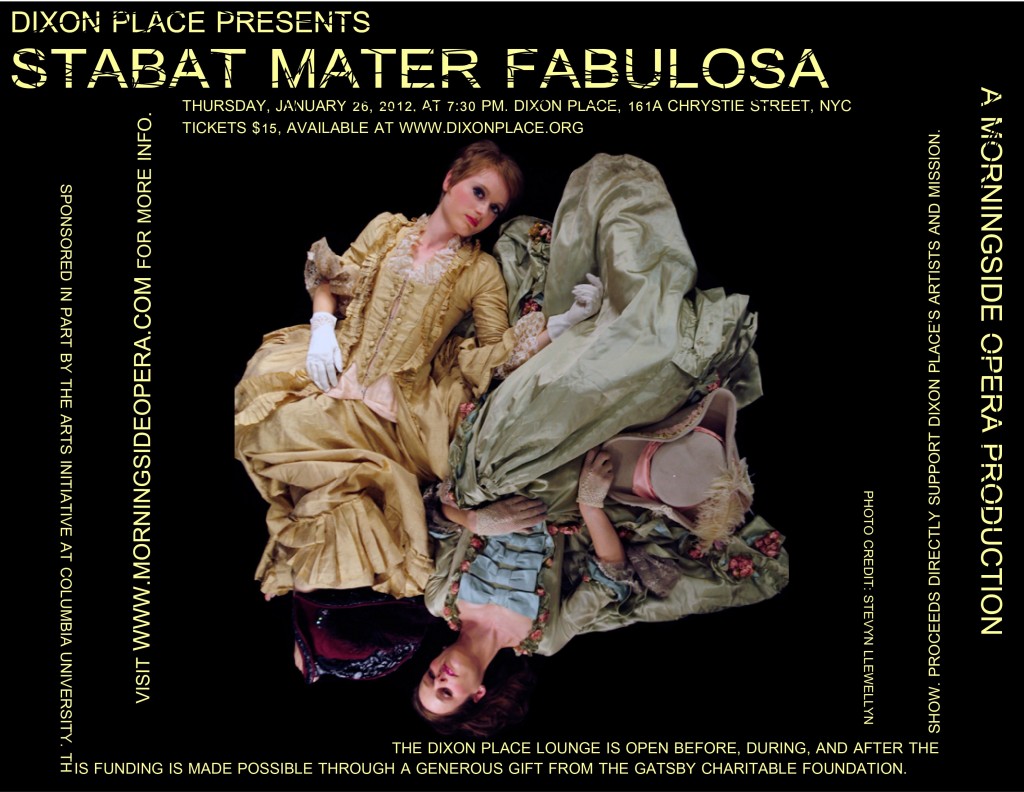
Stabat Mater Fabulosa
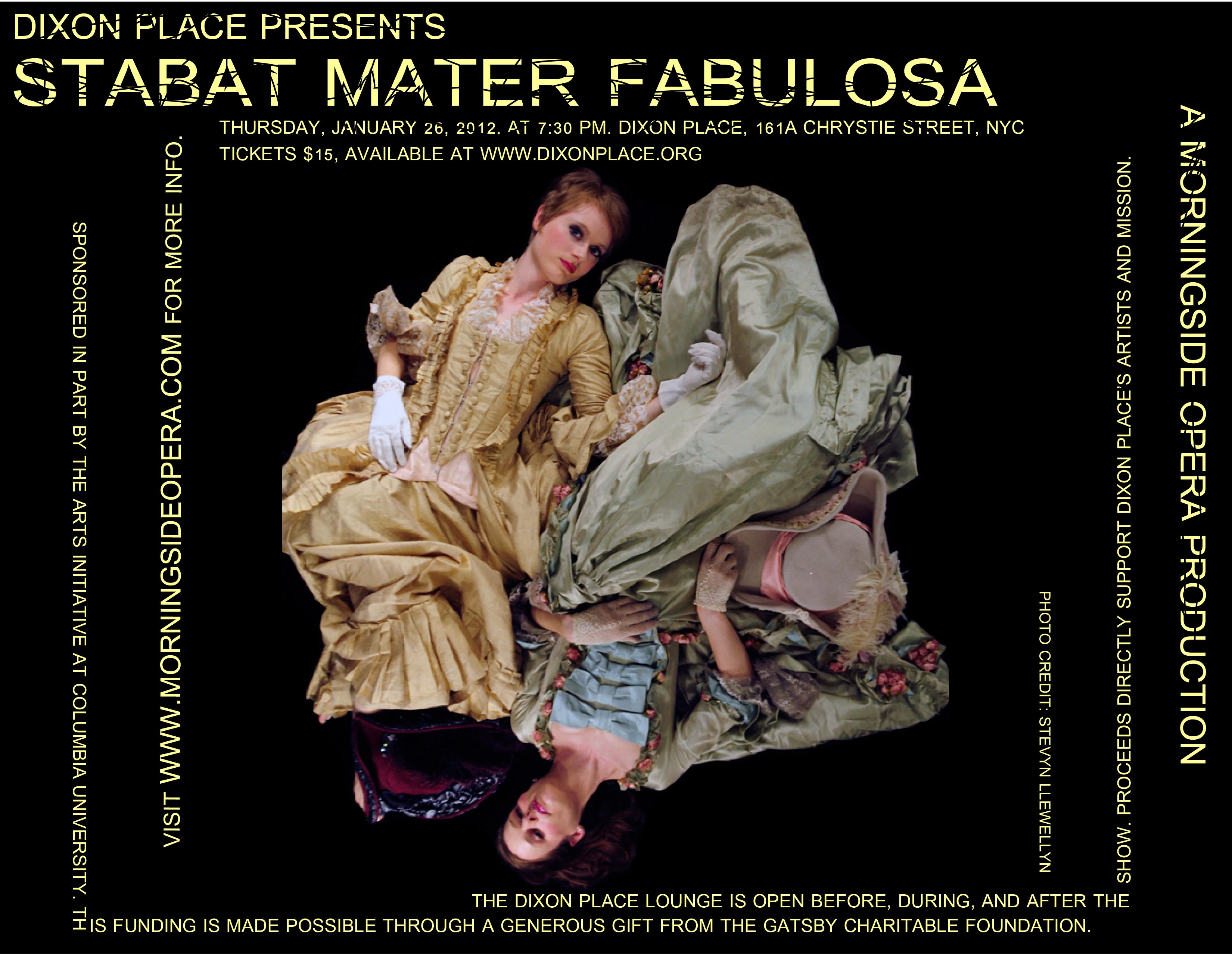
The Morningside Opera company offered up a quite singular interpretation of Pergolesi‘s Stabat Mater in their Fabulosa rendition on January 26th at Dixon Place, which proved, at once, a scholarly as well as a quite literal undressing of the original. Composed in 1736 – the year of Pergolesi’s death at the august age of 26 – the piece has been an iconic work in the canon of western sacred music ever since and has enjoyed an unbroken record of performance for nearly three hundred years. This surely says something about a work, to have endured so vigorously the vagaries of artistic, musical, and religious change, never mind or dare one say, taste. Which in many ways explains its attraction for Morningside Opera, who see their role as boundary-pushers wishing to invigorate dialogue between traditional and new modes of the form. Their stripped down presentation was both scholastically dense as well as visually provocative.
Continue Reading…
Related Posts:
by Geoffrey Paddy Johnson on January 26, 2012

- John Sowle in Horripilation!
/ Photo by Steven Patterson
The writer and performer of Horripilation!, John Sowle, is unquestionably a shining light in the fields of research and preservation of obscure global theatrical traditions, as well as being an imposing performative figure in the relating and embodiment of these same traditions. In 1973, with a Fulbright fellowship to research a doctoral thesis in dramatic art, he spent time at the Kerala Kalamandalam in southern India, where he was obliged to rise each morning at 3 a.m. in order to begin his day’s grueling training in traditional dance movement and actorly craft. Kept on his feet for hours at a time, in a highly repetitive form of dance stepping, his relief would come finally in the form of a massage administered by his teacher (asan), who would walk up and down his back while he lay in a formally controlled position. It should come as no surprise that classical traditions of drama and dance, wherever they originate, involved a regimen of severe physical hardship and mental discipline, but the sharing of these events in the performance by Mr. Sowle, as he reproduces the exercises nearly forty years later, is quite something to witness.
Continue Reading…
Related Posts:
by Geoffrey Paddy Johnson on January 23, 2012
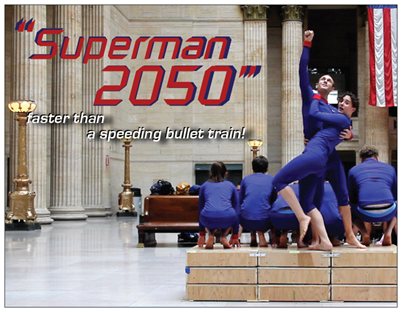
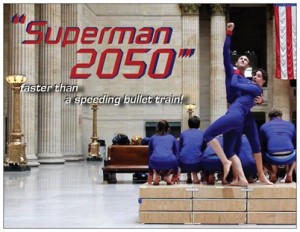 Deploying a short and narrow raised, wooden platform, with a total area surface of 21 square feet, seven actors in blue spandex outfits (that’s 3 square feet each they have to work with; you do the math!), no scenery or lighting effects, and just 35 minutes, Theater Un-Speak-Able set out to tell that well-worn saga of our age, Superman, transposing it to the year 2050. No actor gets to leave the platform during the telling. All of the fantastical visual effects necessary in the elaboration of this story – illustrated comic book panels, complexly designed camera shots – must be generated solely by the actors as they shuffle, dip, duck, dodge and dive while dramatizing such a highly visual narrative. This is both extreme physical performative stagecraft and compacted theatrical story telling.
Continue Reading…
Related Posts:
by Geoffrey Paddy Johnson on January 12, 2012
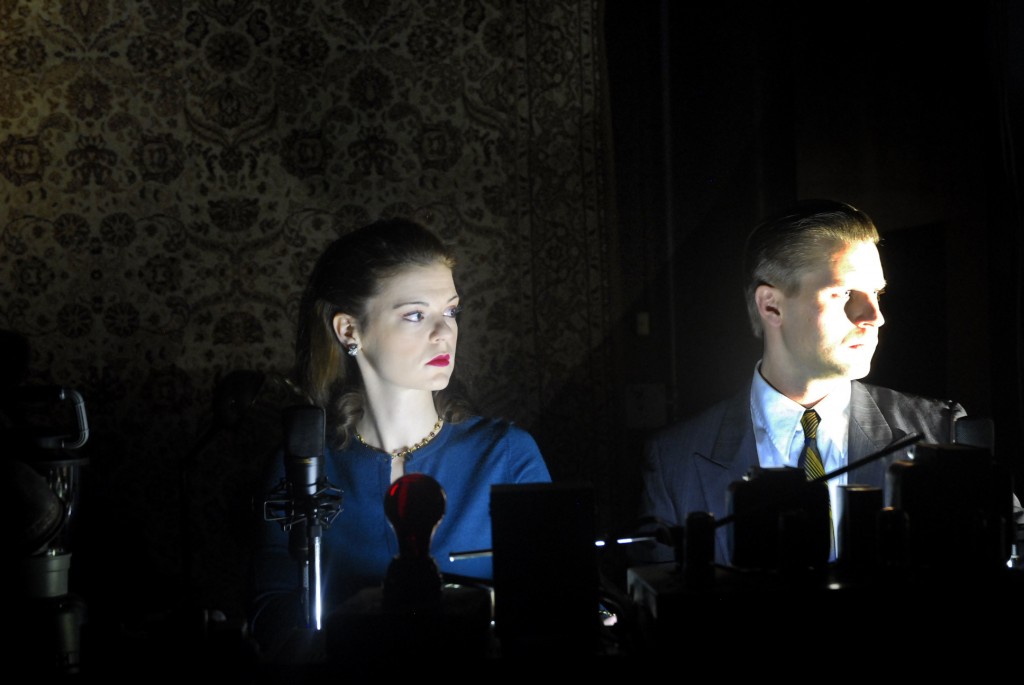
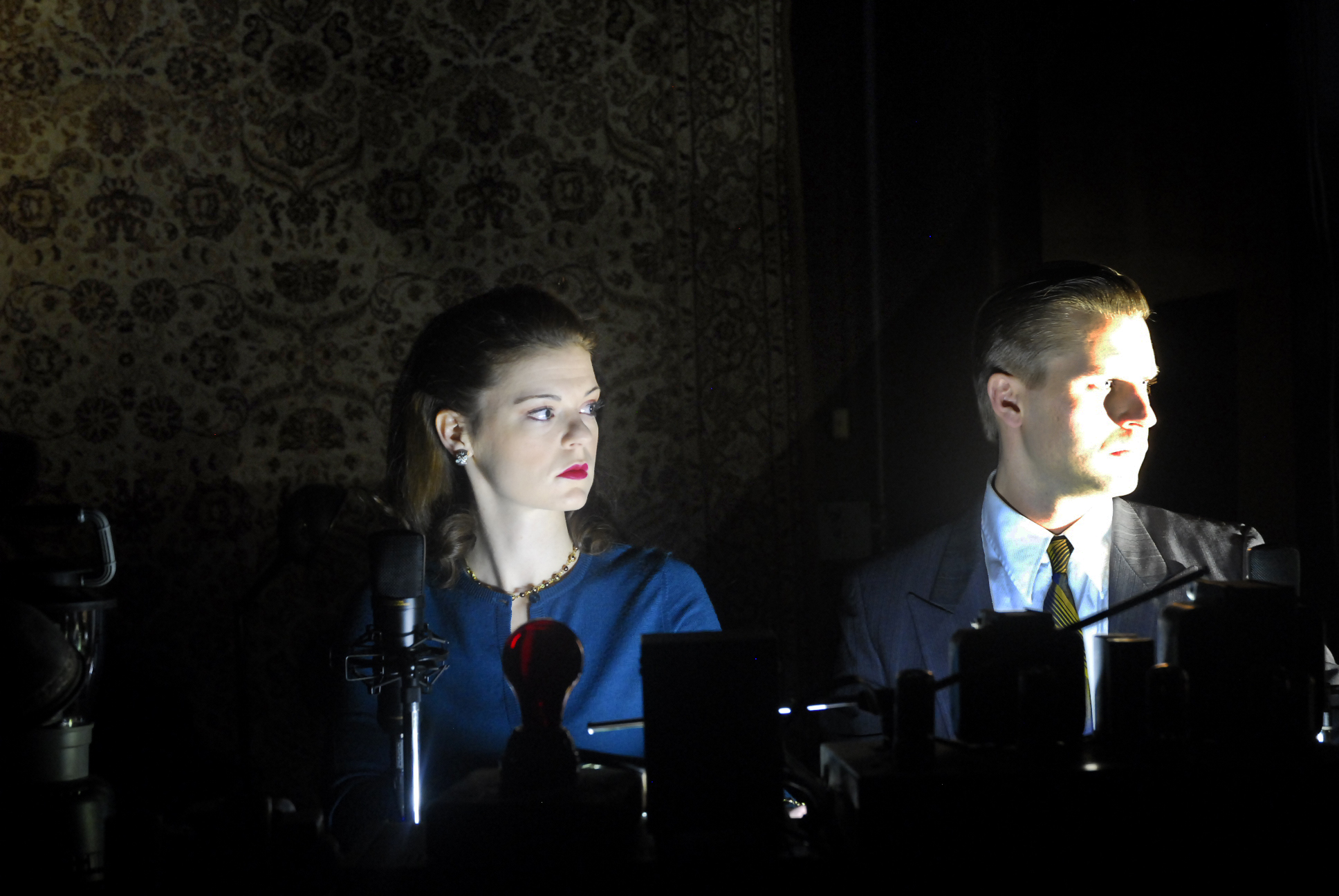
In a late hour email before I attended the first night performance of The Mad Ones‘ Samuel & Alasdair: A Personal History of the Robot War at the New Ohio Theatre, I was notified that Con Edison were currently addressing a problem with the theatre’s heating system and I should consider dressing in a thick sweater. I grumbled a bit putting on my thick sweater as I headed out, but was actually entirely comfortable in my seat for the duration of the performance. Thinking about it now, it is not inconceivable that this alert may have been part of the very clever, meticulously thoughtful and imaginative production team’s idea at generating a theatrical reality for their play. How very 1950s to deploy a thick sweater while attending a theatre in wintertime, be it in the U.S.S.R. or the U.S.A. The production might have been dressing the audience for their performance.
The reason I am left with this speculation is because it seems there is nothing, quite simply nothing, that this production has not given some sharp thought to in their dramatization; sharp thought and imaginative response to. The thoroughness with which the team at The Mad Ones have undertaken this self-authored work is as impressive as it is deeply satisfying. Originally premiered at Brooklyn’s The Brick in 2010 – a production that garnered them a deal of notice and a clutch of NY Innovative Theatre awards and nominations – the play, allegedly, has undergone some minor tinkering and some extra polish since then. The result is a real gift for theatre lovers.
Continue Reading…
Related Posts: