by Sarah V. Schweig on June 21, 2010

A newly fatherless Electra (Sierra Marcks) stands spotlit and centerstage, dressed to the nines in punk-grunge garb, asking Zeus for help: “Are you there, Zeus?” she says, “It’s me, Electra.” Thus this tragicomedic version of the Greek story of Electra, set in the mid-90’s era of Carmen Electra, written and directed by Aliza Shane, begins.
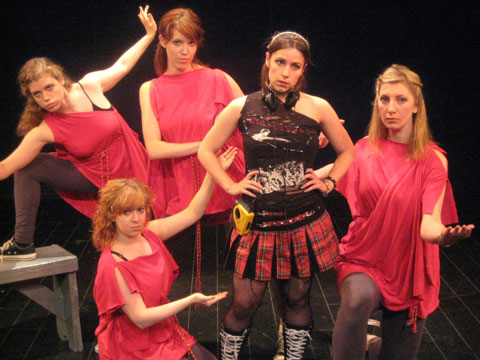
Zeus is dead. At least, for Electra’s intents and purposes. Not once does his lightning bolt shuffle off anyone’s mortal coil in Electra’s favor, even though she continuously requests his help in her plot to avenge the murder of her father, Agamemnon. Her very own mother Clytemnestra (Cas Marino) had conspired with soon-to-be second husband Aegisthus (James David Larson) to kill Agamemnon. Instead of attaining Zeus’s help in seeking justice, Electra is met with taunting unsolicited advice courtesy of her wonderfully sassy Greek chorus (Felicia Blum, Carley Colbert, Kate Dickinson, Ashley Lovell), four women who at once mock her and cheer for her, like any best frenemies would.
Continue Reading…
Related Posts:
by Sarah V. Schweig on June 20, 2010

Art is hard. If an artist wants to articulate something about boredom, he or she cannot simply write and produce a deliberately boring play. Audience members could instead go sit in a Starbucks for an hour and save twenty bucks. Similarly, if an artist wants to articulate something about the absurd, he or she cannot simply formulate a scatterbrained pageant of pastiche and call it existentially profound. Continue Reading…
Related Posts:
by Sarah V. Schweig on June 16, 2010
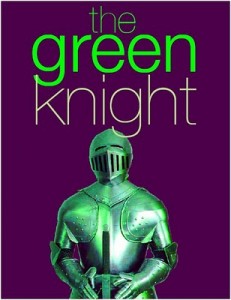
“Sir Gawain and the Green Knight” is a quirky Arthurian romance penned in alliterative Middle English in the 14th-century by the anonymous Pearl Poet. Because it is one of my favorite stories, of all the Planet Connections productions I was slated to see, my hopes were highest for this adaptation of the legend, The Green Knight, written by Brian Rady and directed by Jeremy Bloom.
Continue Reading…
Related Posts:
by Sarah V. Schweig on June 12, 2010
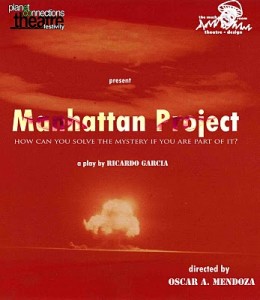
“The Manhattan Project” was the code name for the research and development of the atomic bomb between 1942 and 1946. The project’s early manifestations did occur in Manhattan, but the project would later expand to about 30 different locations in the U.S., Canada and the U.K. and employ over 130,000 people.
One could assert that there are two kinds of people in this world: Those of a perhaps morose disposition who know seemingly erudite specifics about the making and dropping of the atomic bomb and those who don’t.
Manhattan Project, written by Ricardo Garcia and directed and designed by Oscar A. Mendoza, would also make binary assertions: Events are either predictable or unpredictable, mathematical or chaotic, physical or linguistic, which is to say, tangible or intangible. Even the medium of the play is divided in two—film and theatre.
Continue Reading…
Related Posts:
by Sarah V. Schweig on June 6, 2010
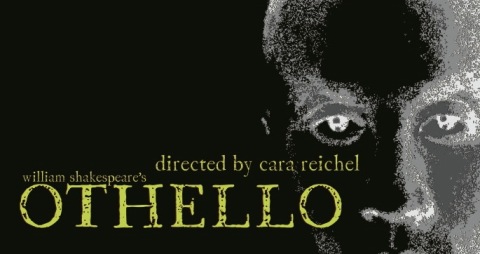
Who would you bring to Othello? Someone you love? Someone you once loved?
Summer. Not exactly the time of year a New Yorker wants to venture into Hell’s Kitchen on a Friday night. Tourists. Bad smells. Bad-smelling tourists. Every out-of-towner at this time of year wants to get drunk, screw one another, and go to musicals. And the Friday I was slated to see Oberon Ensemble’s production of Othello, directed by Cara Reichel, was no exception.
Continue Reading…
Related Posts:
by Sarah V. Schweig on June 3, 2010
*
*
*
*
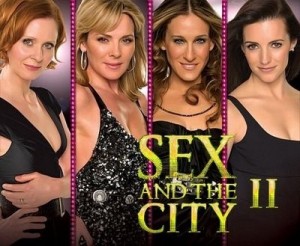
“I’m scared.”
“Me too.”
*
“I’m confused.”
“Me too.”
*
“What just happened?”
“Liza Minnelli dance number.”
“Why?”
“….”
*
Continue Reading…
Related Posts:
by Sarah V. Schweig on May 17, 2010
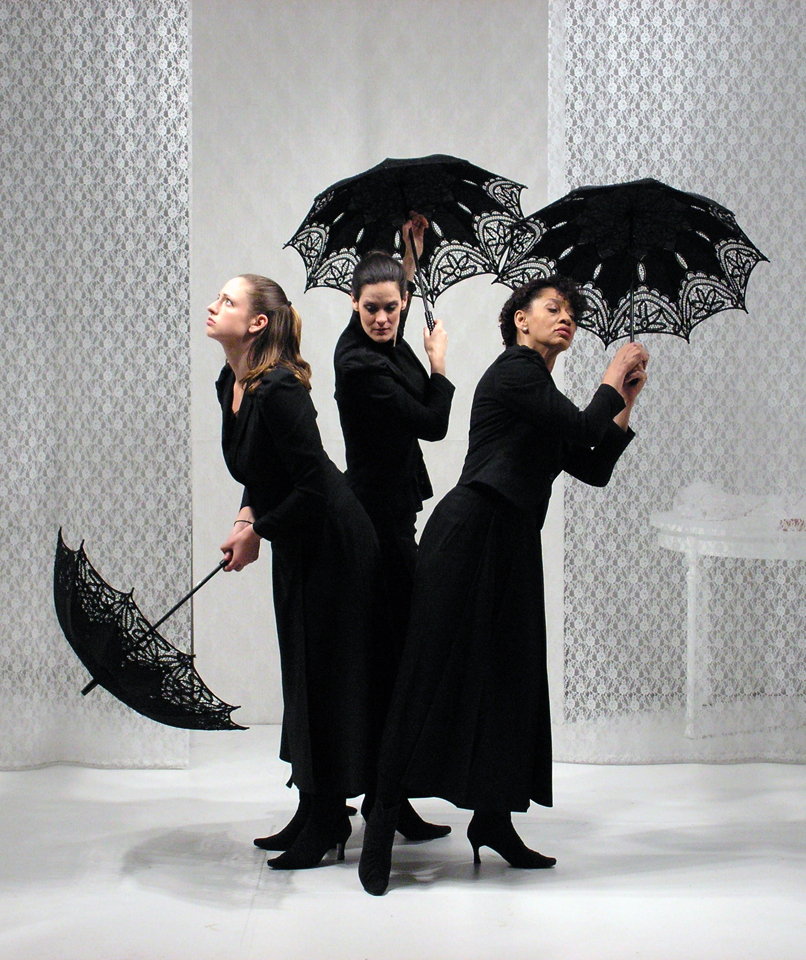
photo by Enrico Luttmann
Immature poets imitate; mature poets steal;
bad poets deface what they take, and good poets
make it into something better, or at least something different.
T.S. Eliot
The very idea of Three Sisters Come and Go was risky to begin with. A collaborative effort between the actors — Liza Cassidy, Claire Helene and Jackie Lowe –, the director, Orietta Crispino, and dramaturg, Marco Casazza, the play would open with Samuel Beckett’s “dramaticule,” Come and Go, and then the following scenes would be drawn from the texts of Anton Chekhov’s four major plays: Uncle Vanya, The Cherry Orchard, The Sea Gull, and The Three Sisters (which, to add to the complexity of the intertextuality, is a play based loosely on the three Bronte sisters), and the entirety of the play was to be governed by Structuralist philosopher and critic Julia Kristeva’s ideas about … something or other.
Continue Reading…
Related Posts:
by Sarah V. Schweig on May 4, 2010
I’m not big on the real world. But The Real World–well, that’s a different story. I don’t have cable. I don’t even have a TV. It is therefore impossible to use innocent channel-surfing as an excuse to pause on a program of eight strangers living in a mansion having their lives taped. No. The steps I take to satisfy my addiction are numerous. I turn on my computer. I type in MTV.com and press enter. I click on The Real World, I click on the next episode, I wait for it to load. Occasionally, when the wireless signal in my apartment wanes, I extract myself from the comfort and comforters of my bed, go into the hallway, unplug the router, count to ten like Netgear told me, and plug the router back in. Cancun, D.C., Brooklyn. I satisfy my addiction come hell or no signal. And I’m starting to have an idea why.
Continue Reading…
Related Posts:
by Sarah V. Schweig on March 13, 2010
…then wilt thou not be loth
To leave this Paradise, but shalt possess
A Paradise within thee, happier far.
-John Milton
One day, a few years back, wandering confused and aimless as I often did when I first moved to New York, I found Paradise.
It was another month or so, though, before I realized I had found it because I hadn’t written it down. All I’d written in my notebook was, “saints and angels embrace.”
Continue Reading…
Related Posts:
by Sarah V. Schweig on February 25, 2010
Man is condemned to be free; because once thrown into
the world, he is responsible for everything he does.
—Jean-Paul Sartre
I.
“Let’s build a stadium,” someone said.
“Let’s fill the bottom of the stadium with ice,” said another. “And let’s fill the stands with people.” Everyone nodded.
“We could affix metal blades to a pair of shoes,” someone said. “We could put these shoes on a person!” another added. “We could have them slide around on the ice wearing these bladed shoes!” added a third. “Let’s call them ‘skaters’ and the shoes ‘skates.’” Everyone concurred.
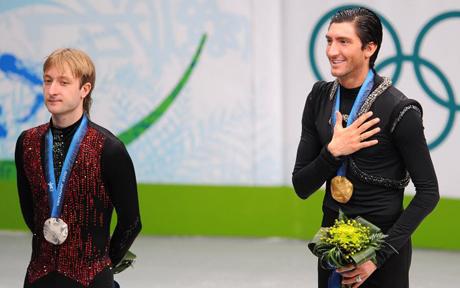
“Let’s name every twist and turn they make while sliding around.” Then another asked, “Like ‘triple axel’ and ‘double lutz?’” “Uh huh!” “We could import people from all over the world to assign numerical scores to what this person does on the ice in this stadium.” “We’ll add the scores together!” one proclaimed, while another piped in, “We’ll declare a winner!” Everyone pondered. “We’ll give them gold, bronze or silver!” Everyone nodded and agreed.
Continue Reading…
Related Posts: