You are currently browsing the Review category.
by Geoffrey Paddy Johnson on May 24, 2012


The first thing you can’t fail to notice upon entering the performance space for Empirical Rogue‘s production of Romeo and Juliet, is the spectacular environment chashama have provided for the company. Formerly a taxi service garage on Jackson Avenue, LIC, the space retains the character of its previous functionalism, but the translation of the environment for its theatrical purpose is all but awe inspiring. This is immersive theatre space at its most captivating. Three very simple arrangements of double rowed seats place the audience right at the edge of the action. Behind them floor to ceiling drapes of canvas enclose the space and focus attention on one corner of the performance area, where a raised office hutch serves as the play’s famous balcony setting. The raw cinder block walls are spectrally painted with fading murals and decorative effects that describe location and contribute atmosphere almost slyly – “Verona” the largest declares boldly, like some pageant-styled vermouth advertisement of the Forties. A raw building scaffold sits easily in the space, spotlights glow in constellation behind canvas walls, and a wide grill metal gate recalls you to the actuality of the location. Before the drama has begun you want to take your hat off to production designer, Dante Olivia Smith, muralist, Adam Fujita, and producer/director, Tim Eliot. This is one of the most intelligent and graceful set designs I have come across.
Continue Reading…
Related Posts:
by Geoffrey Paddy Johnson on May 9, 2012
New York City is host to two concurrently running productions of Shakespeare’s Macbeth this Spring: Aquila Theatre‘s presentation at the Gym at Judson (April 18th – May 6th), and Epic Theatre Ensemble‘s interpretation at the 47th Street Theatre (April 20 – May 26th). A stable of many a theatrical company’s portfolio, apart from its matchless, vivid language, Macbeth as drama has much to attract aspiring ensembles, not least the challenge presented in portraying two of Shakespeare’s most unsympathetic lead roles. We watch as Macbeth and his wife are enticed into evil by the lure of power and then, as good stage villains, are punished for their crimes. The trick, however, is in making them into more than stage villains, for in that resides the case for tragedy and its capacity to ennoble human existence. It is a tricky bit of the equation as both of these productions can testify.
Continue Reading…
Related Posts:
by Karen Tortora-Lee on May 8, 2012


There’s a reason that the second rule of Fight Club is the same as the first rule of Fight Club. Because Tyler Durden (and by extension, author Chuck Palahniuk) understood that it’s human nature to break rules. First rule of Fight Club – don’t talk about Fight Club. Second Rule of Fight Club: DO NOT talk about Fight Club. So what did people do?
What does this have to do with August Schulenberg’s new play DEINDE? Simple. DEINDE – a sci-fi story of quantum biologists who use a Dineural Entangled Intelligence Network DEvice [a "clumsy acronym, really, not even a real E at the end"] to “loop in” in order to juice their brains so that they can be smart enough to cure a virus that has been killing the world’s population – begins with four simple rules:
- When using DEINDE do not think of anything other than work.
- Do not keep the connection to DEINDE live outside of work.
- Do not use DEINDE to communicate with each other.
- Do not use DEINDE to accss the world online.
Sounds so easy to follow, right? So did “Don’t talk about Fight Club” and we all know how that turned out.
Continue Reading…
Related Posts:
by Michelle Augello-Page on May 7, 2012

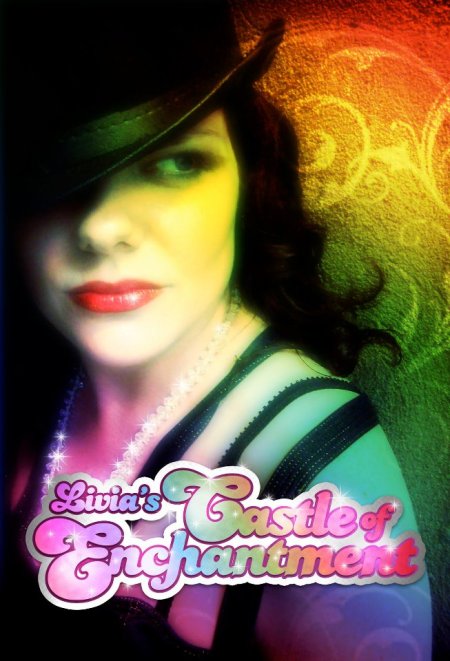
Actress and Comedian Livia Scott hosts this monthly variety show, where dead celebrities are brought back to life and stellar guest performances contribute to the experience of Livia’s Castle of Enchantment at the UCB Theater East.
I attended Livia’s Castle of Enchantment on Tuesday, April 24, and was pleasantly taken on a whirlwind as Livia morphed into the dead celebrity of the evening: Mike Wallace. Livia’s portrayal as Mike Wallace was as respectful as it was funny and had the crowd laughing throughout the show, highlighting her skills in stand-up, improv, and impersonation.
Continue Reading…
Related Posts:
by Karen Tortora-Lee on May 3, 2012
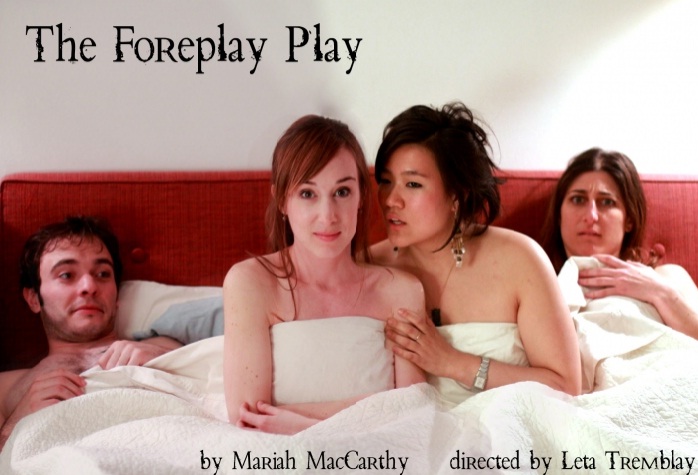
There is a very telling moment which comes two thirds of the way into Mariah MacCarthy’s play The Foreplay Play which is currently being produced by CAPS LOCK THEATRE at a site-specific location (WAY off-off Broadway) in Williamsburg. This dramedy about the tension which builds between two couples as they tentatively (and sometimes not so tentatively) lay the foundation for a night of orgiastic bliss has many titillating moments, but the one which encapsulated this show for me was probably the least sexual of the night.
Continue Reading…
Related Posts:
by Stephen Tortora-Lee on May 1, 2012

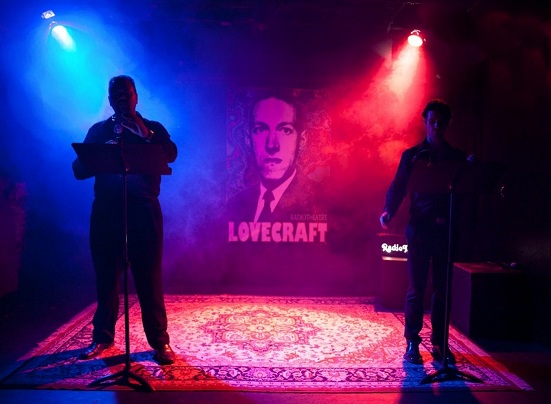
Lovecraft Festival (Photos by Aaron Pachesa Photography)
THE OLDEST and strongest emotion of mankind is fear,
and the oldest and strongest kind of fear is fear of the unknown.
When I think of Howard Phillips (H.P.) Lovecraft’s Weird Stories I think of very intelligent people, facing the unknown. An unknown that is not known for a reason, as if we as human beings had evolved a blindspot to these things in order to protect our sanityand allow us to keep functioning as a society – especially after the world turns out to be different than we had ever imagined it. The truly alien nature of the entities that cross the paths of the protagonists (as opposed to “heroes”, as they rarely have a resounding victory) of these stories reminds us of the fragments of dreams we might have which don’t make sense, but disturb us greatly for reasons we don’t quite understand.
RADIOTHEATRE has taken Lovecraft’s stories in this 3rd edition of their regular Lovecraft Festival, and made them more horrific by performing them as a radio play – where we are forced to believe the unbelievable because the story is being told to us aloud – instead of just letting us process the strange visions of Lovecraft only in our heads. Unlike most of Lovecraft’s stories, which are generally written in the style of a tortured lone soul chronicling his story, the tales being told are split into 3 voices (or in the case of The Horror On Martin’s Beach, a town) so there is always someone we can truly connect and sympathize with – even as the monstrous consumes them (and us) with fear.
Continue Reading…
Related Posts:
by Geoffrey Paddy Johnson on April 29, 2012
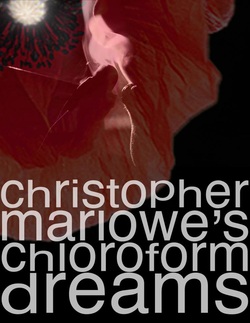
There’s much more than a touch of Raymond Chandler’s Philip Marlowe in the character of Katharine Sherman‘s Christopher Marlowe in her new play, Christopher Marlowe’s Chloroform Dreams, running at the lower east side’s The Red Room. The time-and-smoke shrouded legend of the Elizabethan playwright hangs over the proceedings and propels the story all the way, and then nearly, to its end. Familiar tropes from classical mythology and fairy tale erupt everywhere in a noiresque style tale of a femme who is at once fatale and in flight. Mix in more than a strain of poetic patter and the result might be ponderous, over rich and over-reaching if it weren’t from the pen of a careful, gifted playwright who has a sharpened sense of when to call off the big thunderous themes to allow the smaller human story to breathe. Sherman is excellently served in this production by director Philip Gates who has done a great deal to let this highly theatrical, complexly structured drama flow. And flow it does, like silk, like smoke.
Continue Reading…
Related Posts:
by Karen Tortora-Lee on April 18, 2012
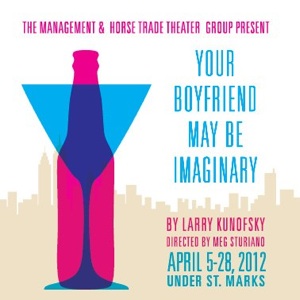
While there’s nothing to indicate that Sondheim influenced Larry Kunfosky’s Your Boyfriend May Be Imaginary in any way (in fact, extensive interviews with Larry Kunofsky beforehand never once included references to The Man or the the musical I’m about to cite) we all have our own personal archives. To me, there was an undeniable Company element (albeit an updated one) which manifested early on and lingered for most of the play. Perhaps unintentionally Kunofsky has, in Your Boyfriend, offered up the city which Another Hundred People paid (somewhat contemptuous) homage to – the “city of strangers” with the people who “meet at parties through the friends of friends who they never know”. And as main character Marci spends the night living out the line: “I looked in vain”, another hundred people just got off of the train.
Continue Reading…
Related Posts:
by Karen Tortora-Lee on April 13, 2012
HA! is a trio of Rich Orloff’s most popular and acclaimed one-act comedies: Oedi, a parody of Oedipus Rex, The News From St. Petersburg, a Chekhovian spoof set in 1905 Russia, and The Whole Shebang which portrays the entire universe as just a college student’s masters thesis on another dimension. What they all have in common is a talented cast, and a base-note of comedy which ranges from the absurdly silly to the thoughtfully facetious giving audiences an opportunity to indulge in every kind of laugh from the titter to the snort to the guffaw. Coincidentally all three plays just happen to take place at 4:00 in the afternoon.
Each member of the talented cast has an opportunity to play multiple roles throughout the evening as they traverse from ancient Rome to the well appointed living room of the Russian Aristocracy, to, ultimately, some nebulous region that sits high above the universe we call home.
Continue Reading…
Related Posts:
by Karen Tortora-Lee on March 21, 2012
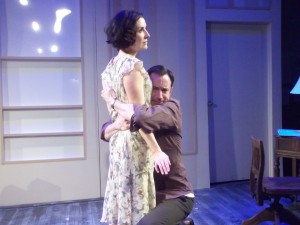
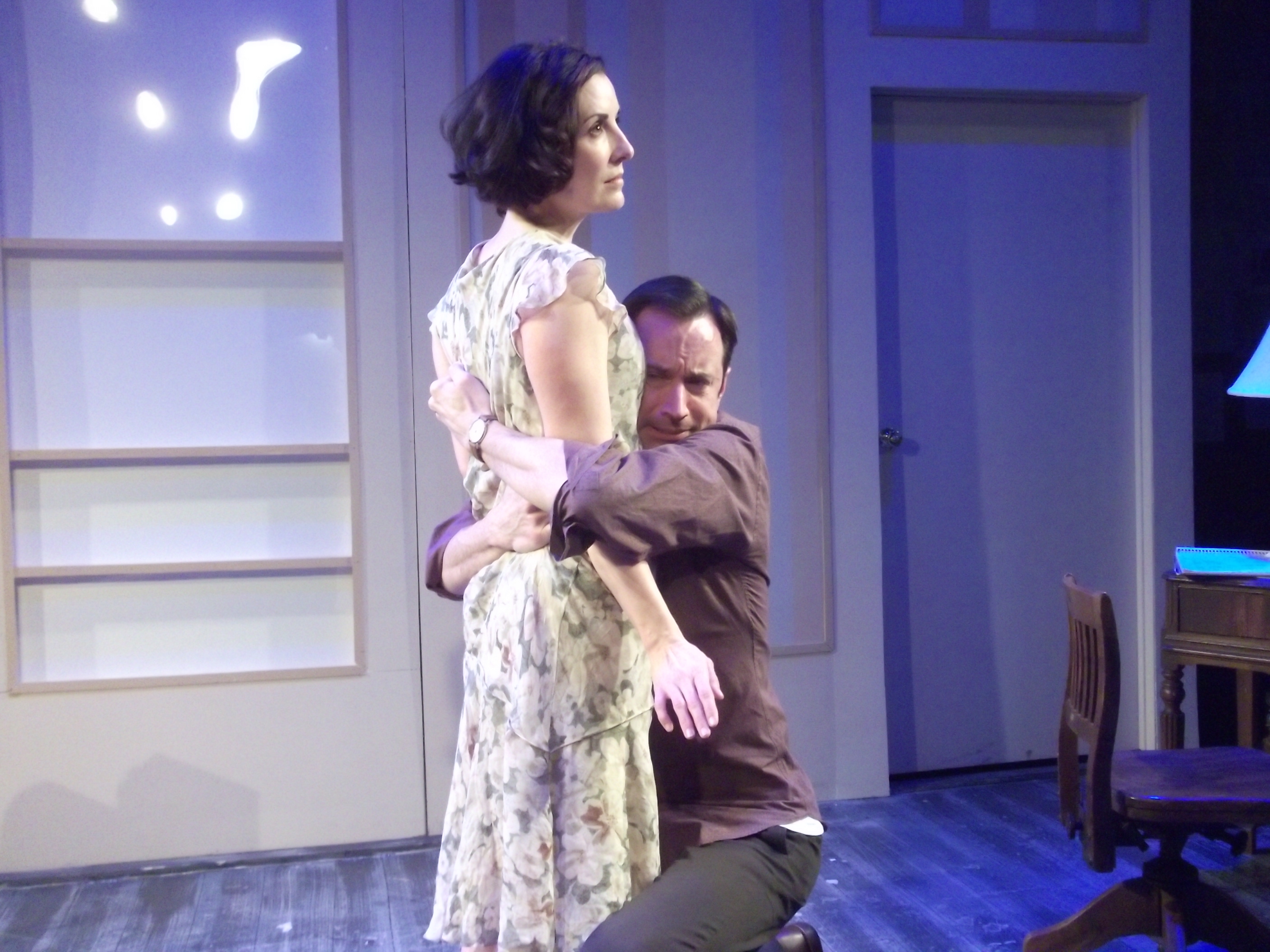
The Real Thing featuring Synge Maher & David Nelson
Art imitates life. Life imitates art. Often times -for the life of a playwright- the lines are so blurred that it’s almost impossible to distinguish realism from hyper-realism or acting from genuine feeling and emotion. When fact and fiction can no longer be untangled it isn’t always easy to recognize if the words you’re hearing are being spoken from the heart or simply being recreated from a scene plucked from the past. Somewhere amid all this, one would hope to find The Real Thing.
Continue Reading…
Related Posts: